A Deep-Dive Into IFP-Components →
Hier lesen

.jpeg)
Carbon fiber components are valued for their strength-to-weight ratio. Their environmental footprint is harder to defend.
Most carbon fiber parts are made from prepreg sheets that are cut to shape, generating 30 to 50% scrap material. The cutting process shortens fibers, making true recycling nearly impossible. The industry norm is downcycling, incineration, or landfill.
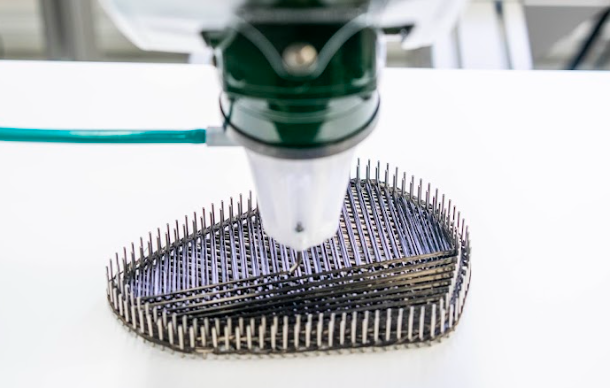
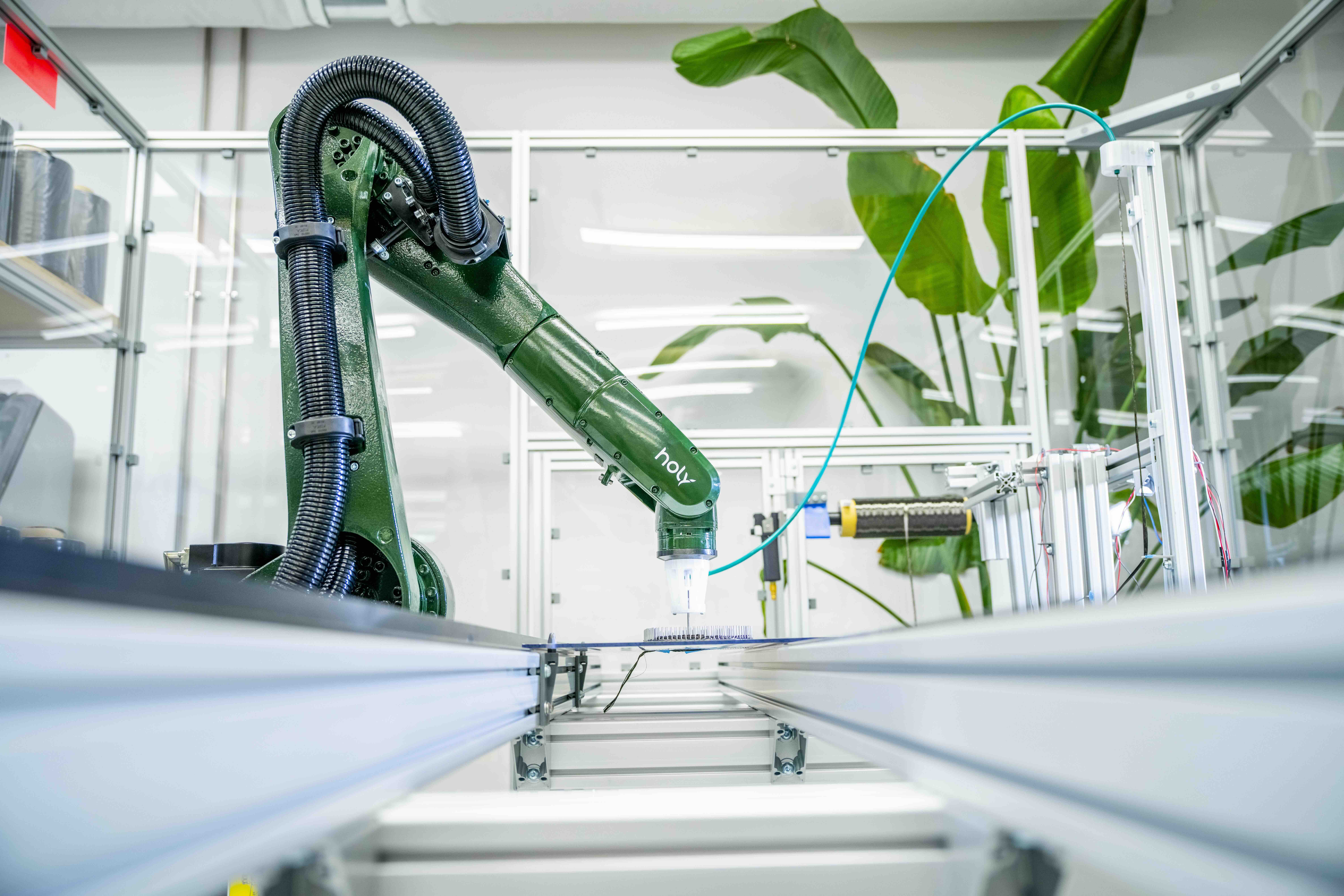
Holy Technologies' Infinite Fiber Placement (IFP) technology takes a different approach. IFP places continuous dry fibers along load-optimized trajectories calculated by proprietary software, generating no offcuts and no wasted material. The fiber structure is shaped into the near-net geometry of the final part, transferred into a closed mold, and cured under controlled conditions (more info on the process in this article). This process delivers parts at minimum weight with enhanced mechanical performance. Because fibers remain intact, they can be fully recovered at end of life and re-enter them into the production cycle. To learn more about how this works, read our guide to carbon fiber recycling.
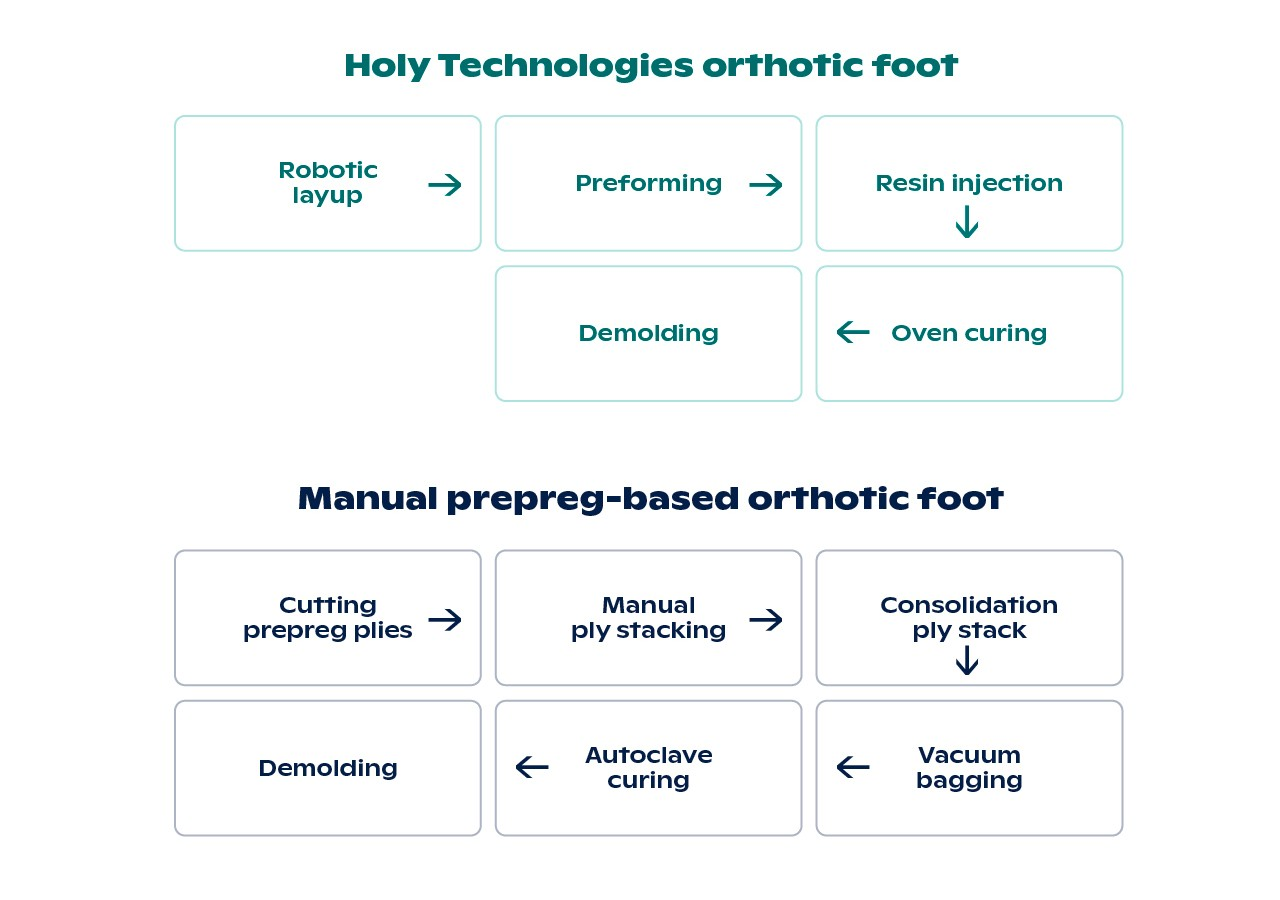
To quantify what that actually means, Holy Technologies worked with KRAHN Chemie to conduct a Life Cycle Assessment (LCA) on a foot component of a lower leg orthosis, comparing the IFP version against a conventional prepreg-based equivalent. Prepreg refers to pre-impregnated fiber sheets that are manually cut and stacked, the dominant manufacturing method in composite production today.
An LCA is a standardized method for measuring the environmental impact of a product across its entire existence: from raw material extraction through manufacturing, transport, use, and end-of-life disposal or recovery. It replaces assumptions with data. One of the primary metrics is Global Warming Potential (GWP), a measure of how much a product contributes to greenhouse gas emissions over its life cycle, expressed as CO₂ equivalent.
The results are measurable. At cradle-to-gate, covering raw materials and manufacturing, the IFP component delivered 38% lower GWP. Across the full life cycle including end-of-life fiber recovery, that figure reached 76%.*
.jpeg)
Three factors drive that reduction: lower carbon fiber content, reduced energy demand during manufacturing, and more effective fiber recovery at end of life.
Holy Technologies' ambition is to make composite manufacturing autonomous, to help manufacturers build radically better lightweight components. At Holy Technologies, "radically better" applies to more than mechanical performance. It also means understanding and continuously reducing the environmental cost of every component we build. This LCA is one step in that process. We will keep measuring, publishing, and improving in order to deliver the best possible components to our customers.
76% is a number worth examining. Read the full LCA analysis published by KRAHN here.
*GWP-total calculated using EF v3.1 characterization factors, in accordance with ISO 14040/44 framework and EN 15804+A2 reporting standards.
Book a free consultation with our team to understand how our technology can improve the footprint of your composite components.
.svg)

.png)